
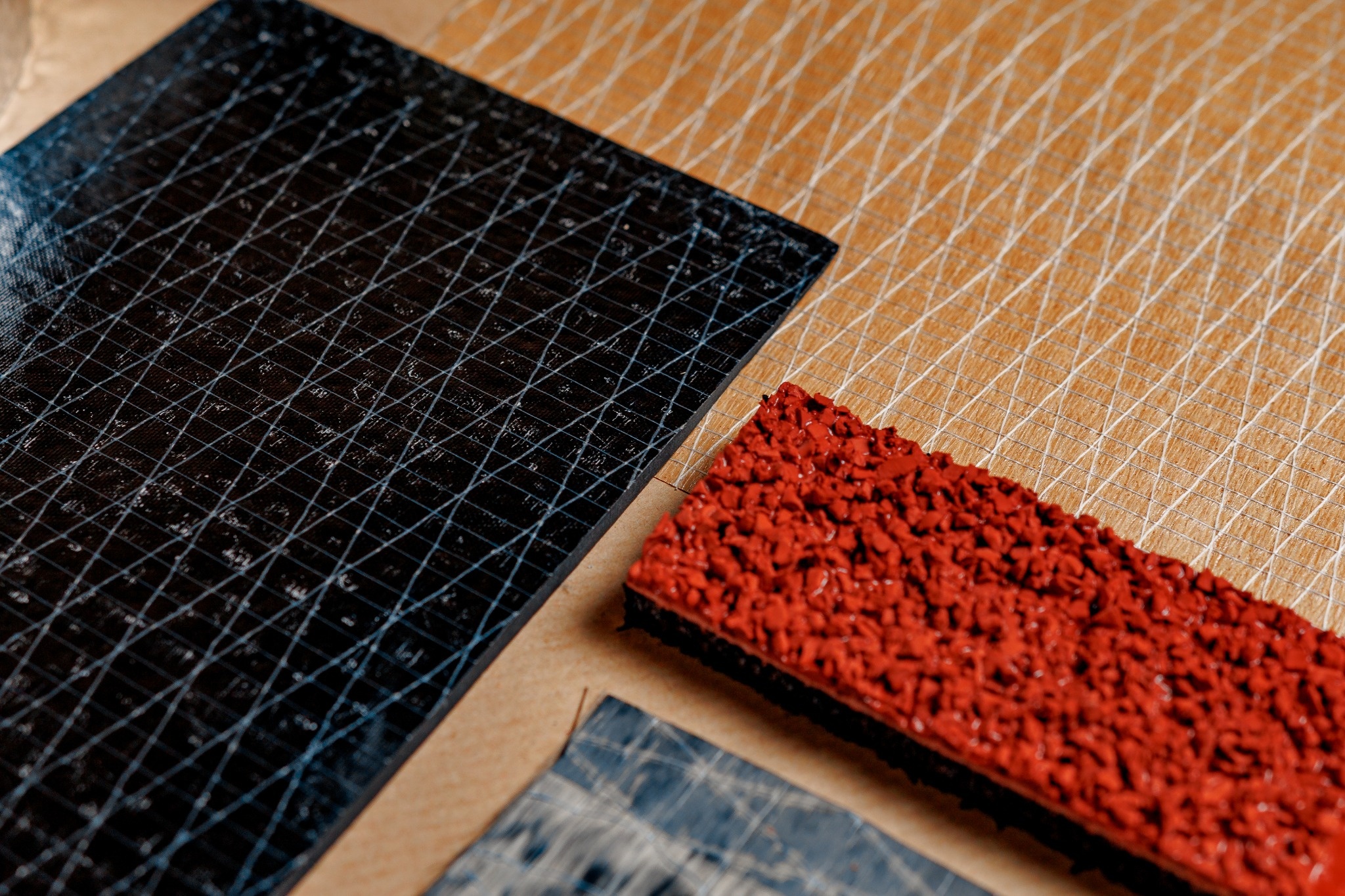
For sound insulation, car manufacturers and automotive suppliers use sound-absorbing moulded parts made from heavy foam or bitumen. These are installed where only an extremely flat design is possible, such as under the bonnet or the headliner. Some spaces are difficult to reach or only accessible during assembly (e.g. between the door panel and the lowered window). Depending on the vehicle class, sound-damping elements are also used:
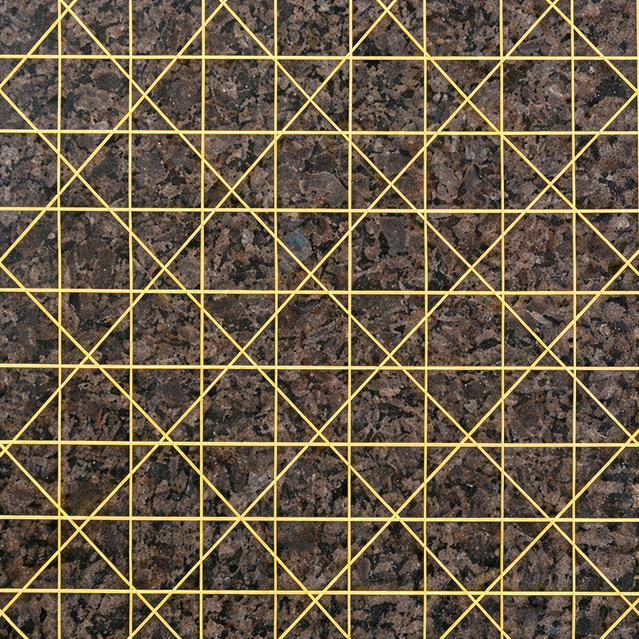
BAFA® laid scrims are also used to reinforce headliners and parcel shelves, with the focus on improving dimensional stability and torsional rigidity. Another application is impact protection mats for car doors in tight garages.
Laid scrims are lightweight structures made from yarns, a form of technical textile that differs significantly from
conventional woven fabrics:
Laid scrims are lightweight structures made from yarns, a form of technical textile that differs significantly from
conventional woven fabrics:
In automotive assembly, every second counts. BAFA® laid scrims save automotive suppliers time in converting. There are three ways to process them:
BAFATEX supplies laid scrims wound on rolls, designed for automated production and high processing speeds. BAFA® laid scrims are easy to cut and punch, making them suitable for both manual processing and die-cutting lines. In the final step, they speed up assembly and save time for your customers.
Depending on the properties required, the following materials are available:
Glass fibre is the most widely used material for reinforcing sound insulation mats. Glass fibre or glass filament is particularly resistant to engine heat and very low outside temperatures, and offers a long service life under strong temperature fluctuations.
Typical construction for sound insulation mats: 6-directional, warp: 34 tex glass filament yarn, weft: 22 tex glass filament yarn.
Several variables can be adjusted to tailor the reinforcement to your requirements:
Leiersmühle 19
51688 Wipperfürth/Germany
E-mail: info@bafatex.de
Phone: +49 (0) 22 67 87 13-0