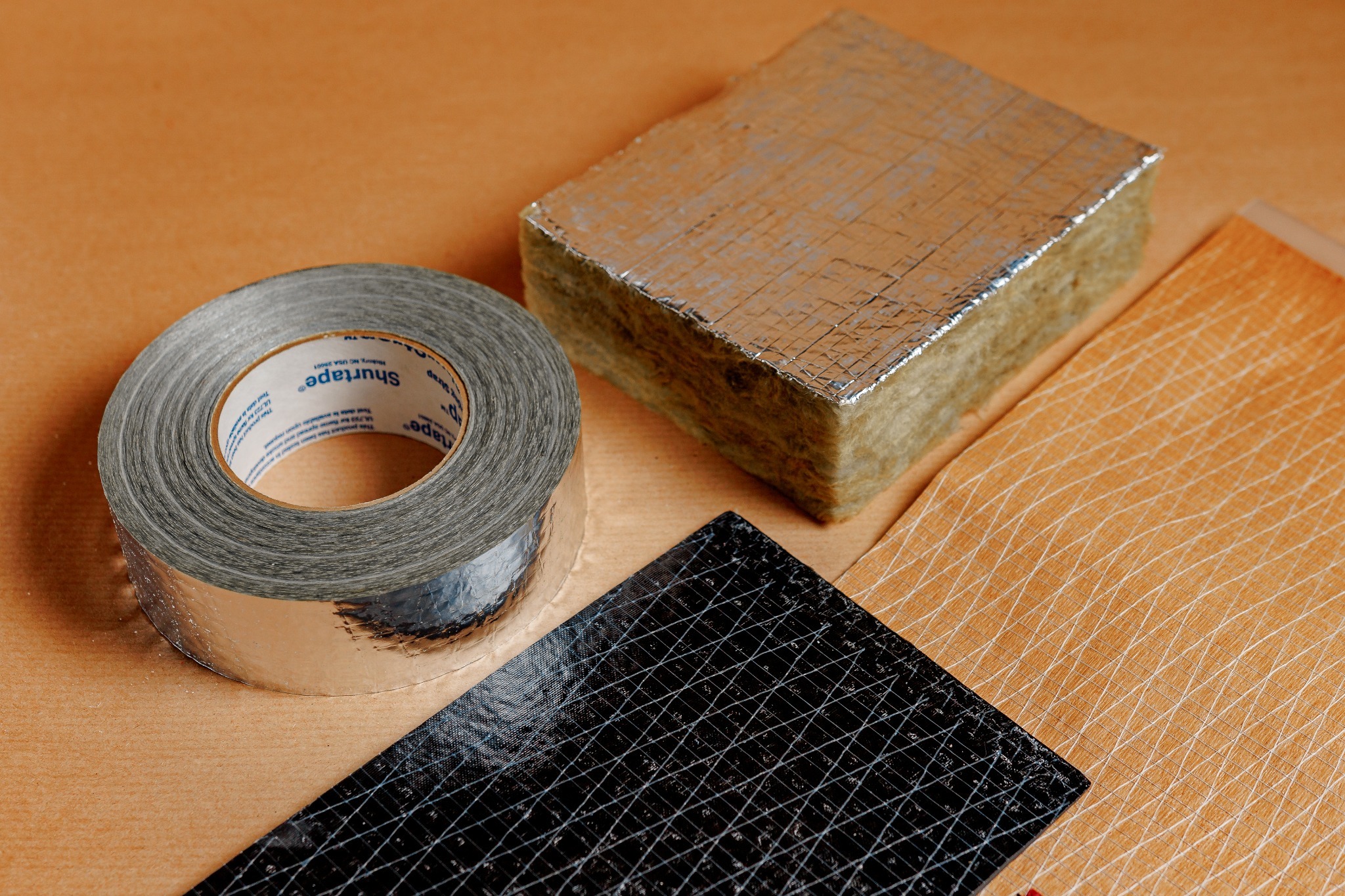
We supply manufacturers of single- and double-sided foam tape and transfer tape with laid scrims.
Laid scrims act as effective overstretch protection and increase tear strength. Their structure gives carrier-free pressure-sensitive adhesive films better stability and absorbs movement of the bonded surfaces without tearing.
On a wide range of substrates, scrim-reinforced tapes offer both higher tear strength and a long service life. Our laid scrims support the viscoelastic properties of the adhesive.
Foam adhesive tapes carry only a thin adhesive film on the top or bottom, covered by a removable waxed or siliconised release liner.
Typical foam materials used by our customers:
Typical adhesives are polyacrylate and hot-melt adhesives.
Laid scrims are ideal for absorbing the tensile forces that occur when foam tapes are unwound by hand and applied to a surface.
Airtightness and windtightness systems in roofing and interior construction require particularly strong, durable adhesive tapes in accordance with DIN 4108-7:
Flexible BAFA® laid scrims reinforce sealing tapes. They meet all legal requirements and key industry and consumer standards. Where laws, norms or standards require it, our products are finished solvent-free.
Unlike most of the roughly 900 other types of adhesive tape, double-sided acrylic foam tapes consist entirely of adhesive.
Waxed or siliconised liners or release paper cover the adhesive on both sides until application.
Depending on the application, the self-adhesive acrylic foam core is reinforced and stabilised with a laid scrim and given an additional adhesive film.
This construction allows the tape to flow into the surface and form a physical bond with the substrate. It does not cure but stays flexible and achieves 100 % wet-out. Thanks to their construction, scrim-reinforced acrylic foam tapes absorb energy and compensate forces – especially on hard-to-wet surfaces.
Double-sided acrylic foam tapes can stretch by up to 50 % without tearing or detaching. BAFA® laid scrims – unlike woven fabrics – can support this high extensibility thanks to their diagonal structure.
Tapes with scrim-reinforced acrylic adhesive provide fast initial tack. They conform to a wide variety of substrates and help reduce weight, especially in vehicle manufacturing.
Lightweight, rigid components with rough surfaces can be fixed quickly and securely in horizontal or vertical positions. Like other fastening methods, the tape can compensate for tolerances and gaps in components such as crash pads or deformation elements.
Tapes for vehicle interiors must meet the automotive industry’s requirements on VOC (volatile organic compounds).
Typical sandwich construction of such tapes:
1. Silicone-coated PP liner
2. Polyester laid scrim
3. Polyacrylate adhesive
Laid scrims are lightweight yarn structures. Like nonwovens, they are not woven.
Laid scrims differ significantly from conventional woven fabrics:
Laid scrims are usually hidden as an intermediate layer in sandwich constructions. That does not exploit their full potential: beyond their function, laid scrims offer another valuable option:
they can make the added value of high-tech products visible.
Under transparent surfaces or as the top layer, laid scrims offer interesting design options. Depending on yarn thickness, density and angle, products can look more delicate, more robust, or both.
BAFATEX supplies laid scrims wound on rolls, designed for automated production and high processing speeds. With BAFA® laid scrims, manufacturers save time in converting. The laid scrims are usually processed as an intermediate layer in sandwich constructions, where they also prevent the layers from shifting.
BAFA® laid scrims are easy to cut and punch, making them suitable for both manual processing and die-cutting lines.
With BAFA® laid scrims, products can be processed as roll goods, cut sheets or die-cut parts.
Depending on the properties required, the following materials are available:
Glass fibre and carbon are the two most widely used materials for reinforcing rackets and bats, both offering a long service life under strongly fluctuating loads. Typical construction for a ski, for example: carbon weft yarns in BAFA® laid scrim 100/20 made from 1100 dtex black polyester combined with 1210 dtex Twaron®.
Several variables can be adjusted to tailor the reinforcement to your requirements:
Leiersmühle 19
51688 Wipperfürth/Germany
E-mail: info@bafatex.de
Phone: +49 (0) 22 67 87 13-0